Build the ration around good forage
Forage is the foundation of a dairy ration. Well-made maize silage, clean hay, fresh fodder and suitable pasture provide fibre that keeps the rumen working. Poor-quality or mouldy forage reduces intake and cannot be fully corrected by adding more dairy meal.
Test feeds when possible and measure what each group actually consumes. Grouping cows by production stage helps avoid underfeeding high producers and wasting expensive concentrates on cows with lower requirements.
Balance energy, protein and minerals
Energy supports maintenance, pregnancy and milk synthesis, while protein supplies building blocks for rumen microbes and the cow. Minerals and vitamins support fertility, immunity, bone strength and metabolic health. The correct balance depends on forage quality, milk yield, body weight and stage of lactation.
- Introduce concentrate increases gradually over several days.
- Split larger concentrate allowances across multiple feeds.
- Provide a properly formulated dairy mineral rather than guessing individual minerals.
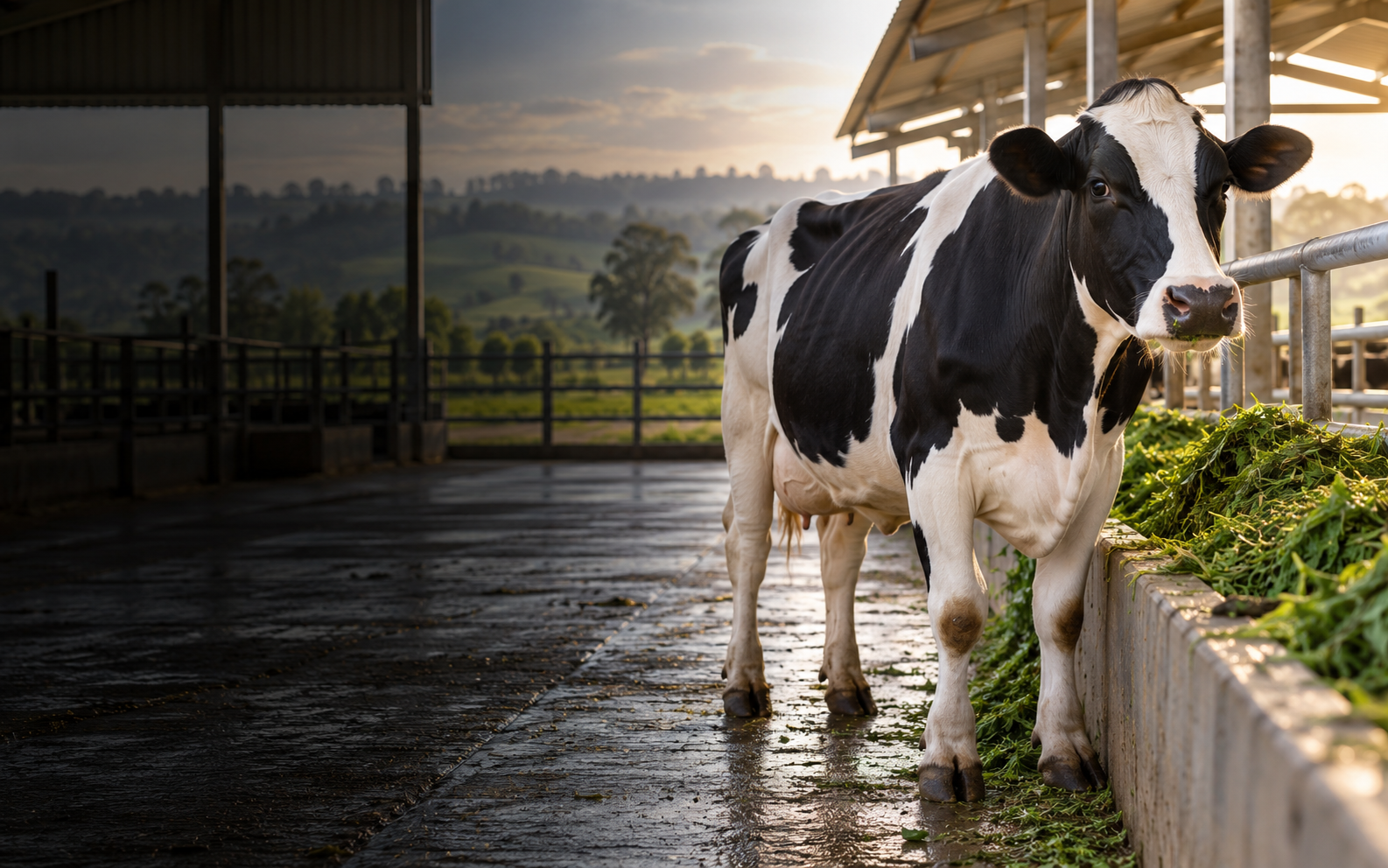
- Keep feed troughs clean and allow enough space for timid cows to eat.
Water is the cheapest essential nutrient
Milk is mostly water, so limited or dirty water immediately limits production. Provide unrestricted access to clean water near the feeding and milking areas. Check trough flow, cleanliness and competition daily, especially during hot weather.
Watch the cow, not only the formula
Monitor milk trend, body condition, manure consistency, cud chewing and feed refusals. Sudden drops in intake or production can indicate disease, heat stress, poor feed quality or an overly rapid ration change. Work with a qualified nutritionist or animal-health professional when formulating for high-producing or transition cows.