Begin with your farm, not the animal
The best cow is not automatically the largest or the one with the highest claimed milk yield. Choose an animal that matches your feed supply, housing, labour, climate and cash flow. A high-producing cow can disappoint quickly when moved to a farm that cannot maintain her ration or comfort.
Decide whether you need an in-calf heifer, a freshly calved cow, a dry cow approaching calving or a growing heifer. Each option has a different price, level of risk and waiting period before income begins.
Inspect the cow systematically
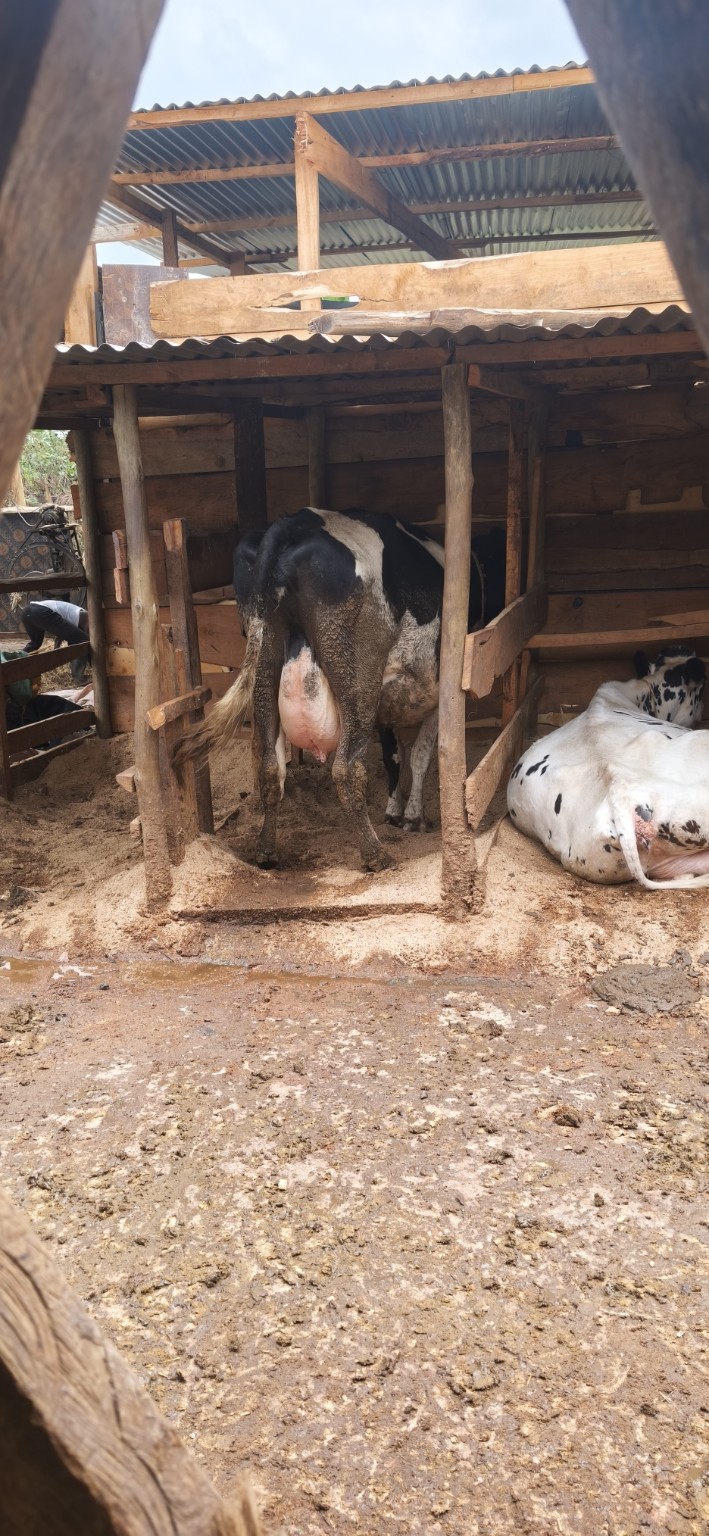
Observe the animal standing and walking before touching her. She should be alert, breathe comfortably and place weight evenly on all four feet. Look for nasal discharge, persistent coughing, swollen joints, wounds, overgrown hooves or obvious lameness.
- Check body condition: extreme thinness or excessive fat can signal management or health problems.
- Examine all four udder quarters and teats for swelling, injury, hardness or uneven development.
- Confirm age, calving history, current milk production and the date of the last serving.
- Ask to see vaccination, treatment, breeding and milk records where available.
- For a claimed pregnancy, request confirmation by a qualified animal-health professional.
Verify production claims
Milk yield changes with stage of lactation, feed quality, milking frequency, health and environment. A single verbal figure is not enough. Ask when the cow calved, how many times she is milked, what she eats and whether the stated yield is a daily average or a peak result.
Whenever possible, observe a complete milking and compare the result with recent farm records. Also budget for transport, transition feed, veterinary checks and a short adjustment period after arrival.
Protect the transaction
Inspect the animal in person, verify the seller, agree on the animal identity and record the terms of sale. Do not rely on photographs alone. A transparent seller should allow reasonable inspection and answer questions about known health, breeding and production history.